Description
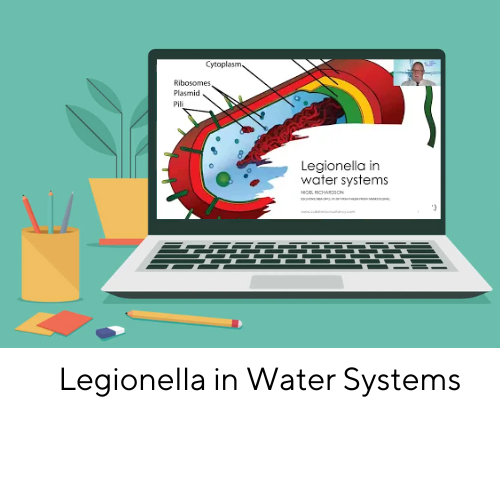
Nigel Richardson highlights the critical need for robust Legionella management in building water systems to prevent Legionnaires’ disease, emphasising health risks, legal frameworks, and practical compliance measures.
Key Points:
- Legionnaires’ disease is a potentially fatal pneumonia caused by inhaling aerosols from water systems contaminated with Legionella pneumophila, a risk heightened by age, health conditions, and water system neglect.
- Legal compliance is guided by the Health and Safety at Work Act, ACoP L8, HSG 274, and BS-8680, requiring documented risk assessments, written schemes, designated responsible persons, and staff training.
- Practical controls include maintaining hot water above 50°C and cold below 20°C, regular flushing, removing dead legs, monitoring biofilm, cleaning outlets, and using technology (e.g., RFID temp checks, rapid testing).
Learning Objectives:
- Understand how Legionella develops in building water systems and the health implications, including risk factors and symptoms of Legionnaires’ disease.
- Identify the key UK regulatory frameworks and duties of care for managing Legionella risks, including required documentation and inspections.
- Apply practical water hygiene strategies, including flushing regimes, temperature control, outlet cleaning, and risk zone identification, to prevent Legionella proliferation.